Saturday, February 6, 2010

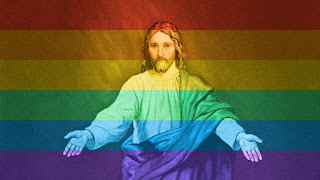
God is Love or Jesus is Divine--But NOT Both! A short Bible Contradiction Discussed


The New Testament is filled with errors and contractions. If single verses aren't in conflict with each other’s claims then entire themes are found to be contradictorily negating each other. 

For example, suppose we ask whether or not God is loving and that Jesus is divine. Christians will say yes to both, but the Christian concept of God is clearly WRONG. (Bible ignorance strikes again!) Apparently, the New Testament is quite clear on the issue, and when compared the the character of God explained in the Old Testament, we find it makes it abundantly clear that God cannot be all good if Jesus is divine, and if Jesus is divine then God cannot be good. Let me explain (emphasis mine, of course):

God is love. (John 4:16)

Love is patient, love is kind and is not jealous (1 Corinthians 13:4)

You shall not worship them or serve them; for I, the LORD your God, am a jealous God (Exodus 20:5)

So my question would be this: Is God a loving God?

Logically, considering the evidence, love is kind and not jealous, God is jealous, therefore God cannot be love, according to Paul's definition of love, and so John 4:16 is a contradiction in God's character. We know God is, and cannot, be love by the definition given by Paul, who spoke with authority via the Spirit (Ephesians 3, 1 Corinthians 2:3-5; 12:3; 14:1, 18; Romans 8:14,16; etc.) that love is not jealous. The author of John, however, equates God as love, and we are in conflict. The problem being that God (who we've established is a jealous God by his own account) is incompatible with the definition Paul gives and is in conflict with Johns message of God being love.

So someone must be wrong here. It couldn't possibly be God (should he exist), so we'll rule out that possibility. So either Paul is wrong or the author of the book of John is gravely mistaken.

God can only be love if, and only if, we claim that John's definition of  a loving God is incorrect, but this causes us a bigger problem. Why? Because the author of John claims to be speaking through revelation (Revelation 1:1), thus if his claims on the nature of love are false, then his other claims lose credence as well, including his claim that Jesus was divine. Let's not forget that the the 4th Gospel's message is clearly that Jesus was divine and co-eternal with the Father, and so Jesus too is a divine being of love, but more importantly let's not overlook the fact that this message, this theological premise is only found in the Fourth Gospel and not the Synoptics. Therefore the Christian theist has a conundrum, because of the logical conclusions one derives at given the evidence.

The strict rationalist must conclude one of two possibilities: 1) Either God is love and Jesus is NOT divine. Or 2) God is not love, and therefore has the capacity to be capricious and malevolent, and Jesus IS divine (but with the capacity to be capricious and malevolent).  Finally, there is the third possibility which I waited to mention because for the Christian it will seem absurd, but might be the only viable option for those who want real answers, and that is: both Paul and John are wrong. If Paul is guided by the Holy Spirit, and John by divine revelation, then both must be right! Therefore their contradictory claims about God negate each other, and so we can know that God is NOT love.

(Not to mention this causes us to be highly skeptical of whether either of them is telling the God-given truth or not, because if taken at face value their words become meaningless and we are only left with doubt in any of the other incredible claims which they may have made. Furthermore, Paul claims that “God is not the author of confusion” (1 Corinthians 14:33). However, if God divinely reveals two opposing revelations to two different men, then this constitutes a confusion. Paul obviously had forgotten that God deliberately confused the people of Babel in Genesis 11:6-9. And all this on to of the fact that Paul states in 2 Corinthians 4:4 that, "The god of this age has blinded the minds of unbelievers, so that they cannot see the light of the gospel of the glory of Christ, who is the image of God." How is that not up stirring confusion? God putting the blinders on so unbelievers can't find God, then how are they supposed to find God? You know what it sounds like, right? Pin-the-tail-on-the-deity. Confusing enough, if you ask me. Who are we to trust?)

Either way you choose to look at it the problem is inescapable and the only way to reconcile it is to forgo one and take up the other, but at the risk of losing the belief in one of Christianity’s two biggest convictions. So obviously Christians never do this, they're not prepared to, not even at the sake of making themselves into hypocrites. They want to have it both ways, so they ignore the discrepancy, accept both Paul and John's conflicting definitions against good reason, and so the Christian theist settles for the lesser of two evils: hypocrisy over unbelief.

But for the atheist, this is absurd, because to make oneself a bigot for fear that the actual truth would diminish your belief in God as being something other than a loving being, or  else Jesus not being divine, is ridiculous. The truth is the truth regardless of what you want to believe, and in this case, it's plain as daylight that the basic tenets of Christianity which Christians esteem as a vital and fundamental component to establishing their faith are often times incongruous or just plain incompatible. To build a belief system on inharmonious claims, or contradictory ones for that matter, is undeniably outrageously unreasonable. Even so, such  bothersome bits of discordant theology help affirm the atheist proposition that Christian doctrine and philosophy is not only faulty, but is often times undone or proved false by its own inexorable inadequacies.

Dear Christian, you must ask yourself, which God do you prefer? Do you want the all loving God? Or the divine Jesus Christ? Because both are IMPOSSIBLE according to Christian doctrine. If you choose both, then you've done away with the validity of your faith, and furthermore, have made all your claims unjustifiable by letting such contradictions simply lay. Consequently, I rest my case.

Intellectual Terrorism: Multiculturalist Hypersensativity vs. Free Speech


This is Pat Condell's best monologue yet, in my opinion. If you don't like him, that' fine, but many of the key points he hits on in this speech are worth taking note, and the rant on intellectual terrorism and anti-free speech sentiment are more than valid. After all, free speech is the very thing egalitarian humanists like Salman Rushdie, Aayan Hirsi Ali, myself and others have so fought valiantly to uphold. Worth a watch.

Friday, February 5, 2010

SOTERIA

Some free verse I jotted out from the tip of my brain (may have religious undertones--but tried to keep it secular and natural). That is all.


I am the poet, the bard, the grand artificer, of the universe. From the sun to the moon to the stars in-between, all are the creations of my endless imagination. Reality exists because I wish it to, and time captures each moment because I would not let one quantum of silence go unnoticed if it meant that the grandeur would be taken for granted by those oblivious to the magnificence in the preciousness of life and the intrinsic beauty of nature. Only time can seek to make them aware of that which passes them by. 

I've toppled civilizations with my mind, and reconstituted nations with a single thought, changed the course of numerous existences and watched in amiable wonder at the unfolding of events as cause leads to effect, and action to reaction, all weaving a delicate tapestry where each and every person’s destiny is interwoven into the fabric of fate. Behold! The pen is not mightier than the sword, the pen is my sword! Containing only the power of my imagination, my words are the flames of righteousness which lick the blade of my pen quill with frenetic energy, rippling with the power to change worlds.

Gaze upon the great void of nothingness that I make my canvas, a mere tapestry with which I paint my inspiration upon, so that I may fill the void with a cosmos filled with iridescent hues of swirling star dust and glowing hot galaxies, lighting up cosmic clouds and illuminating nebulae sprinkled with the glitter of stellar furnaces blanketing the sky. Anything I do not like I write it out of history and time, and what I desire I make anew. And in this vast power to create I bring unlimited possibilities into the fold of existence. 

In all this, there is not one spec of knowledge or intuitive inclination, invisible connection, or secret yearning I did not conceive of or oversee. Herein these trials and tribulations of triumph and misery, of experience, nothing has ever passed me by, because all, even the smallest minutiae have immense significance.

But for all my toiling, of all the inventions and portraits that I have labored away on, of all the elaborate canvases I have tireless tried to perfect and make masterpieces, there is none more profound than a solitary concept of overwhelming importance. Somewhere from my subconscious it arose, and suddenly it took a life of its own, because it is the most profound and simultaneously the most mysterious. Indeed, this creation is something which even I cannot fully comprehend because it sometimes eludes me. Its force is primal—it’s influence undeniable—its value everlasting. Of all the inventions of wonderment, the most inspirational, the most holy, is LOVE.

Only LOVE captures the essence of the way things ought to be. It is in LOVE where we find our true selves, and it is only in veneration of this lofty ideal that will save us from a wretched fate far worse than death. LOVE is the cure to end all ills and fix all wrongs, and in this single principle is the power to overthrow my own passions and lead me to never before dreamt of echelons of sublime understanding. It is in LOVE where we gain true salvation.

--Tristan D. Vick
2/5/2010

It's Your Life


Nice.

Wednesday, February 3, 2010

The Ineffectually Inferior Nature of Supernatural Thinking: Or a Short Blasphemy


Scottish philosopher David Hume put the nail in the coffin, so to speak, on the philosophical plausibility of miracles over 200 years ago.

The Benson study of intercessory prayer at Harvard University settled the matter beyond a reason of a doubt. If you can’t wish for a miracle, nor be able to ask God for a miracle, then what good is a miracle?

Like Professor Daniel C. Dennett I agree that anyone who still affirms a belief in miracles needs to give a really really really good explanation. (Emphasis on the reallys is mine)

With no prayer there can be no miracle, unless God is omniscient, knowing all, and then a whole slew of logical problems arise. For example, if God knew everything, this would make his knowing that humanity would sin sort of creepy, since he allowed it, at any rate, it would be total theocracy and submission to a being which framed us into committing the worse possible crime against him and then chose to punish us for it (which he already knew he was going to do—which makes it premeditated). A bit capricious and cruel if you ask me.
Then there is the matter whether or not God was truly omnipotent, because if knowing everything wasn’t enough, being ALL powerful comes with its own set of worries. For example, if we were living under the suppressive force of a tyrannical *all knowing *all powerful God, then there would be absolutely no reason for Christ’s death, because like Muslims, I’d have to agree, when they say Allah just forgave humanity, because he is that powerskull... cuz he's God. End of discussion.

So to know the mind of a sinner and be an all loving being but not have the power to forgive them is a contradiction. Christians will often say, but he chose to sacrifice his own son and redeem us! Christ is our salvation, they will plead. And this shows the limit of their imaginations, because if God was *all knowing and *all powerful and this was the absolute best he could think of, then logically speaking, this makes God *all incompetent as well.

To save someone else’s life (vicariously) by sacrificing one's own son in a ritualistic blood sacrifice is nonsensical. How does this exactly atone for our sins? Instead, if Christ was divine, and chose to masturbate in a symbolic ritualistic way (not that much better and spilling blood) wouldn’t this suffice? I mean, if God was *all powerful, and this was the best way to save our immortal souls, would he not have chosen this means of symbolic masturbation instead? See, the idea of a blood sacrifice IS that disturbing and grotesquely ludicrous, not to mention, inadequate for a God who supposedly has the power to will any alternative into existence. A blood sacrifice seems rather primitive and Bronze aged if you ask me. In fact, if you think about it, it's just plain stupid. Sort of like a masturbating Christ.
Not that it really matters anyway, after all, Jesus came back alive a few days later (or so the story goes). Why even waist one's time with a blood sacrifice? At least we know why people masturbate, it's fun, and occasionally pleasurable. Picture it with me for a moment--not the masturbating part but the aftermath of the atonement (get your mind out of the gutter)--so Jesus dies a horrible and gruesome death by crucifixion, and  while all the disciples are in mourning, sitting around lamenting and reminiscing about the messiah’s death, low and behold, who should materialize through the wall? In bursts a fully materialized Jesus (in the flesh!) and freaks everyone out!
“Holy hell! You scared the living bajeezus out of us Jesus!”
“Well it’s me! I’ve died and come back for you!”
But looking awfully divinely reconstituted, Thomas doubts, and says, “Oh yeah?! Prove you’re actually the same Jesus we knew!”
“Oh ye of little faith, gaze upon my completely new heavenly body and behold the wounds I received from yesterday! Or the day before, or before that even! Actually, it doesn't really matter. Go ahead, touch them, just stick your fingers in and wiggle them around a bit, see for yourself!”
(But when some of the women disciples rush up to touch Jesus he warns them that he cannot be touched! And in the same story in another book, there is no Jesus but just an empty garden, with perhaps a gardener. So you could either conclude that they mistook Jesus for the local gardener, or else, that the gardener was Jesus? But what’s this business about not being able to be touched when he then tells Thomas to dig around in his wounds? Logic FAIL! And where does this mysterious garden come from and what's it's purpose in the Gospels--since it has absolutely nothing to do with the continuity or setting of the plot? Continuity FAIL! Just like the torn shroud and the last supper, major continuity fails all around.)
Eventually Thomas does come around, but his skepticism is well deserved, because the two possibilities are this: 1) this is the messiah resurrected—in the flesh! The very son of God no less! (Let's not forget that Jesus is also co-eternal with God, therefore God kills his son and commits suicide to save us! Wait... what? How does this map out?) OR... 2) It’s some lunatic who popped a couple of metal stakes through his hand as to appear to be a resurrected messiah and is now joyfully asking people to painfully inflict more damage by aggravating his open wounds! And what kind of sick, perverted, sadomasochist would do such a thing?

Indeed, no amount of celestial glowing techniques will do away with the inherent contradictions of the story. But just ignore them, why not, it’s certainly easier to just go along with the larger themes, because these are what really matter; unless of course, they seem so incredible, so utterly unbelievable, and so ultimately irrational in such a magnitude as to cause the story to lose its significance and be totally ridiculous.

I'm sure God has better things to do, such as stopping the universe (he apparently designed) from imploding and self destructing. But oh well, let's ignore the science, since it seems as though he was a crackpot designer anyway, since he designed the universe in just such a way as to make it seem that he does not exist! That or somebody fell asleep behind the wheel again.

I mean seriously, after getting out a few blasphemies I guess I'll go play with my useless nipples (thanks God for them, they're great! But what on God's green earth are they for? On women, yes! Love it, wouldn’t change a thing! They serve a purpose. On me… really? Is it an aesthetic thing? This design thing baffles me. Strange though that the whole intelligent design thing is predicated on the necessity of purpose in nature, that obviously specific and purposeful traits then act as proof of having been designed to fulfill a specific purpose, all except for my man-nipples that is. So maybe design doesn’t need a purpose? But then doesn’t this negate the argument in the first place? Has anyone even seriously thought about this? I mean, come on! I think I’ll stick with the theory of evolution, at least it doesn’t cause me any cognitive discord).


So thanks for reading, and I apologize if I had any spelling errors (I know powerskull isn't even a word). In fact, I apologize on God's behalf, since he made my eyes very poorly... and they seem to be getting worse. Spelling errors are inevitable! But God already knew that... in true Orwellian fashion... he knows everything. He's watching you!

Also, I think I might be getting a kidney stone. Some design!

But at least the space time continuum is stable! (For now) 
And since a blasphemy is technically a sin, and a death sentence for an eternity in hell (if you can't dissuade yourself from believing--and you're just stuck a debased sinner regardless) then I say why not add a little coveting to it just to make it juicier and all the more scandalous?
 

I like big butts and I cannot lie.

How about a little idol worship on top? (But it's okay, honest to God, because it's God's wife, Asherah, as if we could forget about her!)


And heck, is it so wrong that I find Haruna Ai attractive (even though she's a he)?


Monday, February 1, 2010

An Unassuming Historicity: Tracing Jesus’ Historical Roots


1.      If we have a clear cut idea of when a supposed historical figure lived and died, and what they did in-between, we can have a better overview of events of their lives which tie into the fabric of history, and if they hold up well against scrutiny, gain credibility. If, for some reason, these events are indistinct or else lack corroboration then it becomes increasingly difficult to place the person or event in the proper historical context.

2.      Consider these simple questions:

a.      When and where was Jesus of Nazareth born?
b.      When and where did Jesus of Nazareth die?
c.      What was his mission/ How does history contrast this with what his followers said?

A-1: An uncertain birth date quite often means an uncertain existence, or else a mythologized one. It is a well established fact that Jesus was not born on December 25th in a manger in Bethlehem as commonly believed in the Christian Nativity tradition. In fact, from what I can discern, the Jesus Christ of the New Testament is, in all likelihood, mainly an amalgamation of mythic deities and heroic figures such as Oedipus, Apollonius of Tayana, Hercules, Romulus, Empedocles, Adonis, Tammuz, Osiris, Attis, Mithra, Dionysus, and Odysseus.[i]

Where was Jesus born? Not in Bethlehem. Most historians agree that Jesus was born in Nazareth, since this is the city he was initially from, where his parents lived, and where he had family ties. When was he actually born? Nobody knows, although there have been numerous speculations and guesses, none of them historically substantiated, and as such, they become negligible as they don’t get us very far. We do not know when Jesus was supposedly born and we have an unconvincingly vague guess as to where.

B-1: Jesus death is as about as curious as his popping into existence. This second date, the demise of Jesus, believe it or not, is as mysterious and perplexing of a mystery as that of his birth date. Again, we are left to surmise.

Good critical thinkers know that evidence which should exist but does not gives reason to be skeptical. Either the evidence is lost or else nonexistent. By contrast, we happen to have impeccable records of the time periods both prior and hither to the already well documented first century. Subsequently we know, to cite one example, that Cleopatra VII, the last of the Ptolemies, was born in 69 B.C.E, became co-ruler of Egypt in 51, was exiled in 48, restored by Julius Caesar in 47, met Mark Antony at Tarsus in 41 consequently sparking one of the greatest love affairs in antiquity, had children together in around 37, and after all this lost everything to Octavian Augustus in 32 in the Battle of Actium. Finally, we know that her empire divided and her fortunes plundered, a destitute Cleopatra committed suicide in 30 B.C.E.[ii]

Now if the news of Queen Cleopatra’s death resounded throughout the ancient world, certainly the news of the King of the Jews, a genuine messiah, who returned to life after being put to death by Imperial Rome, would have been news worthy enough to have been recorded by numerous keenly interested historians. This would yield an ability to corroborate all of their detailed accounts of this unforgettable event and give us an exact date of such an incredible event. But low and behold, before any such date can be given we need to know when Christ died, if he died, so that a resurrection account would be at all believable. Quite unlike Cleopatra’s headline suicide several years earlier however, we have no idea when the man Jesus, called the Christ, actually died. We have approximations and estimates which (according to the barely reliable Gospel sources and the frequently unreliable Jewish historian Josephus Flavius)[iii] estimate that Jesus died somewhere between c.30 and 33 C.E.

The lack of sturdy historical corroboration and indistinct dates surrounding Christ’s death and rebirth scenario is indicative that it is a later Christian tradition which was amended to the already established atonement story that was conveniently historicized to fit, or rather align, with mainstream history for all too obvious reasons.

C-1: What do we know of Jesus’ spiritual mission? A lot actually. Modern scholarship and Higher Criticism of the New Testament, such as Form, Source, and Redaction criticism, along with new archeological finds such as the Dead Sea Scrolls and the Nag Hammadi Library,[iv] have done wonders to reveal the roots of early Christianity. The problem is most all of it is trapped within the confines of Judeo-Christian tradition only, and few if any reliable sources exist independently outside of the Christian framework within that time frame which can be validated. This alone should leave us highly suspicious since the overwhelming predisposition is that, basically, only Christians have the historical “truth” because no other historical account exists, therefore are free to state any Christian story they deem satisfactory as a Christian truth, according to themselves, and this is a bias which shouldn’t be overlooked when considering the trustworthiness of a historical piece of information.

The fact that we only have Christian tradition to rely on and inform us on Jesus Christ’s life may even be an indirect indicator for why record of Jesus’ birth date and physical time of death did not survive. One plausible explanation is that, Jesus, a rather controversial Jewish preacher, became mythologized, as to lose his historical ties, therefore Yeshua of Nazareth’s real life birthday and death are supplanted by orthodox Christian tradition, displaced by his larger than life legend, and become antiquated and soon forgotten in the process. Accordingly, the Jewish Yeshua, a humble servant of Yahweh and an apocalyptic preacher of unassuming class, becomes the mighty messiah, King of the Jews, aka Jesus the Christ almost overnight! Another possibility is that the real historical Yeshua was just too inconsequential, so insignificant, that nobody cared to remember his personal details enough to care to write his biography. A man who was not of nobility or of renown could not possibly hope to grab the undivided attention of important historians under commission of the Caesars and Kings. Indeed, this is what we find to be the case. Only later doe the Jesus legend become note worthy, but by this time it already caries with is the stamp of evangelicalism and the prevailing attitude of the early Christian church.[v]


Conclusion: Contrary to what Christians might think, the birth, death, and resurrection of Jesus Christ are highly suspect, and what’s more, cannot simply be considered historical facts. Because the fact of the matter is, when investigated in detail and critically scrutinized, they fall short every time of meeting the basic prerequisites for what qualifies as historically reliable.

For me personally, this information detracts from the Christian faith immensely. It makes it, in all honesty, uncertain. Christian apologists will claim that since we cannot prove that Jesus did not exist, or that he did not die upon the cross, or that he wasn’t born of a virgin birth then they are safe to maintain their overly confident faith, but only (I might caution) at the sake of making it exceedingly vague and nebulous thus impervious to exacting criticism, and therefore, this formless variety of Christianity is even less likely to be the authentic historical account. In fact, Christians are only left with what is, quite frankly, unbelievable, and that’s before getting into the philosophical arguments about the shakiness of Christian doctrine and theology. Suffice to say, what we have here, everything we know about Jesus’ historical record, just isn’t good enough to establish a basic historical conviction to hinge a belief on.

Biblical scholar and historian James D. Tabor has recently put forth, “The history of ideas always remains a tenuous enterprise with no definable terminia post/ad quem,” that is to say, no precise knowledge can ever be gained as to what really occurred absolutely. I tend to agree. Definitive historical conclusions are always the hardest to establish, we only have our best guess, but at the end of the day our best approximations must be based on solid and sturdy research, and not simple unfounded convictions, and that’s why I find that Jesus Christ’s historical chronology is nowhere near trustworthy. As for his historicity, that too is put into question by the failure to establish a reliable historical chronology of confirmed (basic) events.


[i] See: The Woman’s Encyclopedia of Myths and Secrets by historian Barbara Walker
The Incredible Shrinking Son of Man by Professor Robert M. Price
Does the New Testament Imitate Homer? by Dennis R. MacDonald
The Homeric Epics and the Gospel of Mark by Dennis R. MacDonald
The Jesus Mysteries: Was the “original Jesus” a Pagan God? by Peter Gandy & Timothy Freke

[ii] See: The Oxford Dictionary of World History and http://en.wikipedia.org/wiki/Cleopatra

[iii] See: The Empty Tomb: Jesus Beyond the Grave Ed. By Robert M. Price
The Jesus Puzzle by Earl Doherty
Not the Impossible Faith by Richard Carrier
Who Wrote the New Testament: The Making of Christian Myth by Burton L. Mack

References and Resources on Josephus Flavius:

Thursday, January 28, 2010

Psalm 14: Poetry or Propaganda?


“The fool hath said in his heart, there is no God.”(KJV)

Many evangelical Christians like to quote from Psalm 14:1 to show that atheism is a rebellious form of foolishness which corrupts the person so that “They are corrupt, they have done abominable works, there is none that doeth good.”

Yet is this unflattering attempt at demonization simply directed at nonbelievers in general? Or is it something more?

First a distinction needs to be made. Atheism is not an emotional position of understanding, nor is it a nihilist philosophy about the belief in nothing (as so often wrongly assumed). It lacks a dogma to drive it toward devotional convictions and believing blinding in doctrine (a doctrine it lacks). Atheism, simply put, is the lack of belief in the supernatural, period. It's not unbelief, it is disbelief. Atheist believe in many things, God just isn't one of them.

Religion, by and far, is largely predicated on emotional feelings of a deep seeded desire to be loved, to belong, to be worthy, all seemingly human desires, with the exception of the last bit to prove oneself through pious service to a divine being. This amendment, in God we trust, makes religion a romance affair between peoples emotions and their supernatural inclinations, hopes, and fantasies. Atheism is not any of these things.

Instead, one might define atheism as a cogent position stemming from an epistemic knowledge gained by sound reason and solid logic. It’s a deduction of the evidence we do have, a criticism of the evidence we should have in prolific abundance but do not (the more problematic element I would add), and finally, the conclusion the atheist makes is that there is not enough trustworthy evidence to sustain a belief in the supernatural, and everything else is philosophically unstable or fails to hold up to exacting scrutiny. This doesn’t mean a believer can’t have faith, because their concept of deism is (at the least) plausible, but what it does mean is that faith is virtually untenable, therefore unjustifiable, from a critical, skeptical, and well informed outlook.

Atheism is a skeptical position derived from the keener understanding of the proposition, and it uses rationalism as a tool to logically scrutinize and critically analyze the claims of religion. So the question is, when Christians cite Psalms 14:1 as a proof that atheism is a deficiency, and that it can only lead to corruption, abominable acts, and no good can come from it, are they simply reacting to an emotional conviction based on the dogma which with impolite persiflage attacks the character of the atheist in an attempt to pervert public opinion by subverting any redeeming goodness a nonbeliever might innately have?

I would argue yes, insofar as the way modern Christians tend to use this verse as a form of blackmail. A form of blackmail which tries to subvert the goodness of the nonbeliever by perverting their moral character, thereby degrading the nonbeliever, and giving religious people an excuse to despise, or otherwise, distrust the character of those who don’t subscribe to their belief or sect. But even this religious wrought moral persecution is not without criticism, since if we take time to actually think about it, the verse in question merely talks about the “heart” and not the mind. Accordingly, we cannot blame the atheist who has rejected the tenets of religious faith based on rational means. Most atheists I know are privy to the fact that religion does not answer many questions which they can find in science and other world philosophies, and that faith is by no means an enhancement to this deficiency.

As for the propensity to believe in the supernatural, one traditionally has to set aside rational arguments in order to defend their faith based position, and this only leaves a one dimensional emotional layer left to criticize, and often believers feel offended at any askance which should befall them. Apologetics is necessary to defend the believers position, but I find apologetics is never, and can never, be fully objective since it always takes the supernaturalist’s position and begins from there. In order to be truly dispassionate, one must approach one’s beliefs strictly objectively, and take the role of the scientist. Only then will a person see into the inner depths of their own beliefs, but refusing to do so is simply a stratagem that seeks to avoid answering the questions religion is incapable of answering.

Suffice to say, if any religion did answer all questions fully, properly, and satisfactorily there would be no need for apologetics to defend the merit of the religion or the faith in the first place.

But Psalms 14:1 is not just a way to subject the other to slander, but it’s also a form of fideism, or the doctrine that knowledge depends on faith or revelation from god. It’s saying quite literally that those who reject the Christian God are not only being foolish, but they literally equate to fools, since without faith they could never gain proper knowledge about God—and so their opinion is worthless. Again, I cannot see how this is not a biased position which automatically denies any other possibility or belief system than its own.

Even so, when we read Psalm chapter 14 in full, particularly 14:7, we find that it has a very specific agenda in mind. “Oh that the salvation of Israel were come out of Zion! When the LORD bringeth back the captivity of his people, Jacob shall rejoice, and Israel shall be glad.”

Indeed, the hidden agenda is not so hidden after all. It is apparent that Psalm 14 is a planned attack on those who inhabit the land holy to Jews yet do not believe in the Jewish god. It is a verse which demonizes the gentile and the pagan and the Roman and the Greek and the Arab and all those who are not of the chosen people. It is saying quite clearly, “There are fools in our land! But we will rejoice when God takes Zion back and restores our fortunes!” Never mind how bad of an idea this is in today’s nuclear world. Never mind that Israel’s establishing settlements on the West Bank constitutes theft, and is illegal. Never mind about all that, what is important to note, is Psalm 14’s political message is clearly, without a doubt, propaganda and not poetry.

Antiquated as the sentiment behind Psalm 14 is in the twenty-first century, I still can’t help but find it a little bit insulting. For of a couple of reasons:

1) Ad Hominems: There is no reason to demonize and devalue other people simply because you disagree with them. Ad hominem attacks are used in one of either two ways. First, as a sensationalist tactic to direct attention to oneself, and secondly, as a way to run around the issue without having to account for dodging the question. If anything ad hominem attacks are evidence of someone who is failing to win the argument and is, in all likelihood, incapable of defending their position so they seek to tear down their opponent instead of having to admit defeat and forfeit the debate.The reason religious types resort to it so often it is almost absurd, is because in three thousand years their arguments haven't gotten any better. The atheist and skeptical ones have--as they have progressed along with advances in science and human understanding.

2) Brazen Audacity: As I stated earlier, I never based my atheism on baseless emotionally charged faith based proclivities, but rather, I came to my atheistic stance via a process of objective reasoning, and since it was the choice which left me with the least cognitive dissidence, it was the preferable choice. Granted I may be wrong, but to be proved wrong requires better evidence and explanation, and I am fully open to correct my opinion and changed my mind when I am shown convincing evidence, but as every erudite person knows, incredible claims require equally incredible evidence.

With confidence I think we can say that so far no person of faith has offered any convincing evidence which would hold up to scrutiny adequately enough to cause the most resolute skeptic to reconsider the religious proposition, otherwise we would not be having this debate. And I simply cannot just give them the benefit of the doubt, since their position is not readily tenable. When supposition is all you have to offer you need to earn your comeuppance, that includes gaining credibility and trust and so on.  But religious people often like to pretend they know more than they actually do, state emphatically that God is certain, swear on their holy books that if faith is good enough for them then it should be good enough for anyone, they propose a never ending myriad of ways you ought to live according to their worldviews, and it is in this audacity where they lose my respect, and it is in their failure to answer basic questions they swear they have the answers to where they lose my interest. The bottom line is this, believers need to make their beliefs believable before others will even start to consider them.

So when a believer quotes to me “The fool hath said in his heart, there is no God,” I can’t help but see this as a clear admission that they have no real ground to stand on. For this ad hominem is the first step to the inevitable surrender of faith, it’s the first sign that, whether they will admit it or not, they are losing ground, and their position is in danger of being overtaken by the advancing forces of science, rationality, and better reason. And although this predicted scenario may not be entirely certain, something even I admit, what is certain is, if it should come to pass, as an atheist I have nothing to lose. The person of faith has everything to lose.

The fool may have said in his heart there is no God, but let me tell you what the atheist has said, while holding fast to intellectual honesty, prove God to me in a convincing fashion, that is testable, dependable, and which is corroborated, and which stands up to scrutiny, and does not have discrepancies or irreconcilable difficulties, and which offers a better alternative to everything I believe in, and which makes good on its promises, and is supported by a superfluity of evidence so convincing that it is virtually undeniable, and this might be persuasive enough to sway my intellect

But fool I am not, and that’s why I always wait for the evidence to come in before making decisions. Being prudent and thoughtful is a better virtue, in my estimation, than resorting to brash zealousness. Moreover, an educated guess resulting from a long process of tried and tested, not to forget, critically applied methods is far superior to making a leap of faith and hoping beyond hope that you *might be right. If anything at all, if I may be so bold, it is the religious who take things on faith who are being imprudent, which, ironically enough, is nearly indistinguishable from the foolishness they claim about everyone else—the claim being that a foolish person is one who refuses to understand the truth when it is staring them in the face. In this sense (fideism aside) I would have to agree, those who wish to remain ignorant rather than come to an improved understanding are being fools.

Sincerely,

The Advocatus Atheist